AFAQY Knowledge Base
    Tracking
    Tracking

    Tracking

    📖 Afaqy Knowledge Base / AVL / Tracking

    CONTENTS
    ‣
    Introduction
    • About Afaqy
    • AVL Pro
    ‣
    Technical Requirements
    • Recommended Web Browsers
    • Hardware Specifications
    • Internet Connection
    ‣
    Quick Start
    • Account Setup
    • Logging In
    • Resetting Password
    • Glossary
    ‣
    Map
    • Map Navigation
    • Map Tools
    ‣
    Monitoring
    • Monitoring List
    • Monitoring Tools
    • Monitoring Fields
    ‣
    Dashboard
    ‣
    Statistics
    • Overview
    • Accessing Statistics
    • Filters & Controls
    • Units
    • Status
    • Others
    • Activity & Reporting
    • Exporting Data
    • Related Pages
    ‣
    Charts
    • Chart Types
    • Creating a chart
    • Chart Tools
    ‣
    Geofences
    • Overview
    • Purpose
    • Page Components
    • Display Modes
    • Unit Count Indicator
    • Actions
    • Best Practices
    ‣
    Reports
    • Reports Tab
    • Templates Tab
    • Schedules Tab
    ‣
    Report Categories Breakdown
    • Summary Reports
    • Vehicle Activity Reports
    • Driving Quality Reports
    • Zones Activity Reports
    • Sensors Activity Reports
    • Other Reports
    ‣
    Units
    • Selecting Columns
    • Creating a Unit
    • Creating a Sensor
    • Creating a Command
    • FAQs
    ‣
    Units Management
    • Importing Units
    • Accessing Units
    • Unit Groups
    • Unit Shared Groups
    • Exporting Units
    • Deleting Units
    • FAQ
    ‣
    Messages
    • Permissions
    • Tracing Messages
    • Table View
    • Graph View
    • Common Tools
    • Troubleshooting
    ‣
    Second By Second
    • Permissions
    • Scope & Limits
    • Tracing Second by Second
    • Table View
    • Graph View
    • When to use
    • Troubleshooting
    ‣
    Tracking
    • Tracking Fields
    • Generating a track
    • Tracking Tools
    ‣
    Multi-Unit Follow
    • Screen List
    • Maps
    ‣
    Users
    • Selecting Columns
    • Adding a user
    • Users Management
    • Roles & Permissions
    • User Activity & Auditing
    • Best Practices
    • Permissions & Visibility
    ‣
    Geofences
    • Geofences List
    • Markers List
    ‣
    Geofences Management
    • Importing Geofences
    • Accessing Geofences
    • Geofences Groups
    • Exporting Geofences
    ‣
    Customers
    • Selecting Columns
    • Adding a customer
    • Customers Management
    ‣
    Resources
    • Trailers
    • Drivers
    • Events
    • Status
    • Custom Fields
    ‣
    Settings
    • Protocols
    • Packages
    • Roles & Permissions
    ‣
    Audit Log
    • Overview
    • Purpose
    • Scope of Logged Activities
    • Page Components
    • Event Details
    • Export & Retention
    • Access Control
    • Best Practices

    The Tracking section offers a kit and a map that work seamlessly to help you track the history, routes, trips, events, stops, and parking for any of your units over any specified time period. Note: You can access the Tracking section from the Monitoring section by using the Quick Track icon in the monitoring fields, as explained here.

    image
    1 2 3 4 5 6 7
    Homepage Button Navigation Sidebar Current Section Select Unit Edit Unit Starting Point User Apps
    8 9 10 11 12 13 14
    Notifications Button Full-Screen Button Manage Account Button Sub-User(s) List Map View Button Monitoring / Total Stopping Units
    15 16 17 18 19 20 21
    Moving Units Track Player Export Settings Remove Track Ending Point Updates Button

    Tracking Fields

    By default, the Tracking section includes the following fields:

    🚛
    Name / IMEI
    ‣
    A dropdown list that contains all the units added to your account:
    image

    Select the unit you want to track by selecting it from the list or by typing its name / IMEI.

    🔵
    Color
    ‣
    Two methods for displaying the track's color:
    ‣
    Single Color
    1. Choose this method for a single color per route.
    image
    1. Select the route’s color from six options: red, blue, green, light gray, black, and brown.
    image

    Select this method if you want to:

    • View a unit’s tracking history without speed details.
    • Generate multiple tracks on the map for one or multiple units simultaneously, using a different color for each track or unit.
    image
    ‣
    By Speed
    1. Choose this method for a multi-color route based on the unit's speed.
    image
    1. By default, each color will represent a different speed range:
    • Green: 0–60 km/h
    • Yellow: 60–100 km/h
    • Blue: 100–120 km/h
    • Purple: 120–150 km/h
    • Red: 150+ km/h
    image

    Select this method if you want to:

    • Gain detailed insights into the unit's speed variations along the route.
    • Identify speeding violations instantly without reviewing reports or unit events, while determining exactly where each speed violation occurred.
    image
    âž–
    Line Size
    ‣
    Size controller that represents the unit's route
    image

    Specify the line thickness on the map according to your visual preference.

    🕘
    Interval
    ‣
    Four methods for specifying the track’s interval:
    ‣
    Predefined Dates

    To make it easier and faster for users to start tracking their units, the system provides four predefined date ranges for generating tracking history: Today, Yesterday, Last Week, and Last Month.

    image

    If none of these options suit your needs, you can select a custom date range by setting the interval.

    ‣
    Specified Interval

    Enter the start date and time, as well as the end date and time, for the period in which you need to generate the unit’s track (Manually or by clicking these icons ).

    image
    ‣
    Starts 'From' Until Today

    Enter the exact start date and time (Manually or by clicking these icons ).

    image

    Select this option to generate your unit’s track from a specific past date and time up to today.

    ‣
    For Previous

    Enter how far back you want to track by selecting a certain number and a time-measuring unit (minutes, hours, days, weeks, months, or years).

    image

    Check the Include Current box to include the current minute, hour, day, week, month, or year.

    Generating a track

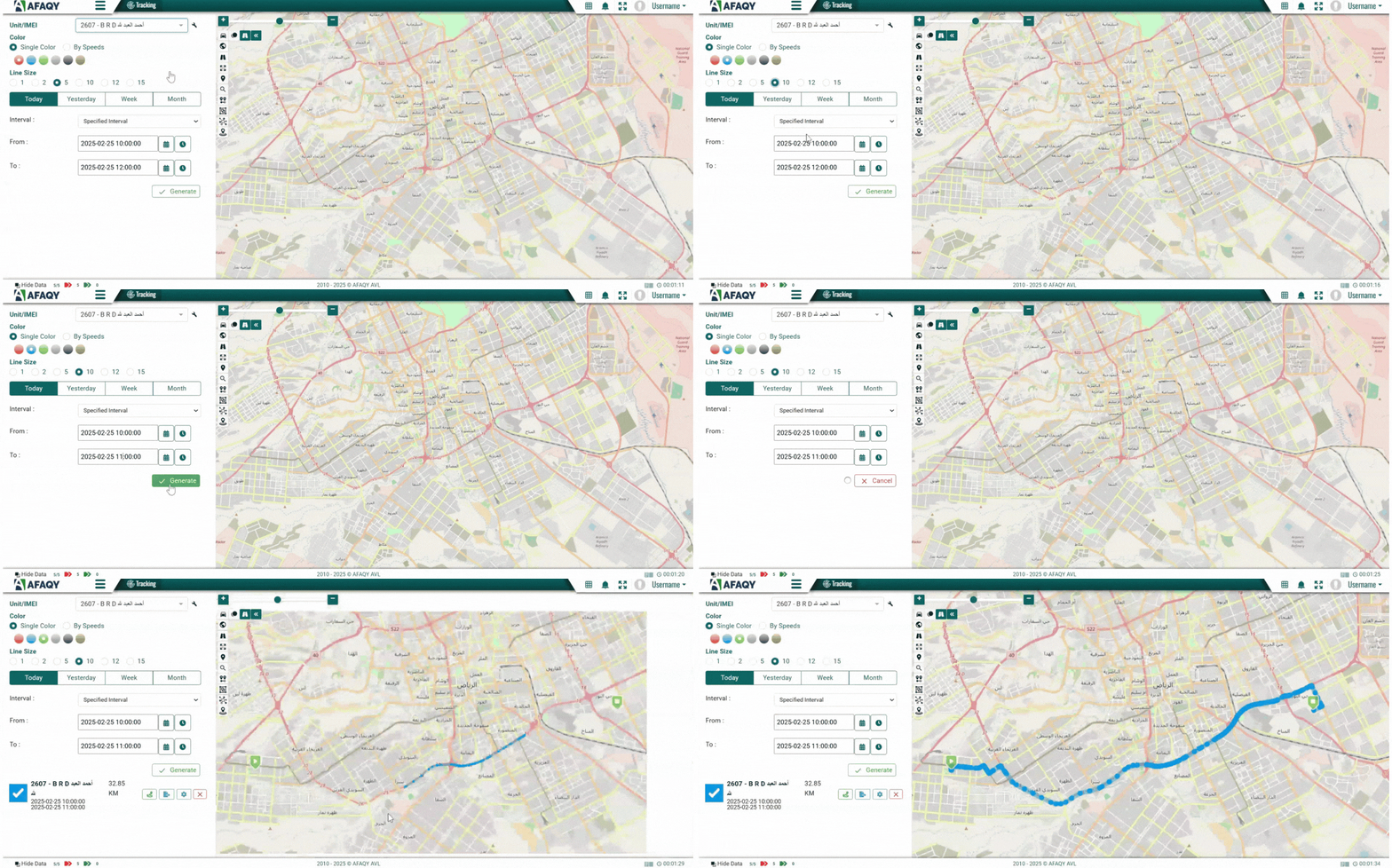
    After filling in the required fields and clicking Generate, the unit’s track for the selected time period will be drawn on the map on the right side of the screen.
    image

    Hovering over any point on the drawn route retrieves the exact location, date, time, speed, and satellites locked into the unit at that point.

    On the bottom left side of the screen, you will see:

    image
    • The unit's name.
    • The tracking date and time.
    • The distance covered during the selected period.
    • The tracking tools: Track Player, Export, Settings, and Remove Track.

    To generate another track, update the tracking fields with the new criteria and click Generate again.

    Tracking Tools

    The Tracking section features a set of tools designed to simplify both the simulation and management of generated tracks, ensuring an insightful tracking experience. Below are the functionalities of these tools:

    icon
    Edit Unit
    ‣
    This feature enables you to edit the unit's properties.

    Clicking the Edit Unit icon will open a window containing 12 tabs (or fewer, depending on your access rights). Each tab holds a property that you can easily edit or update for your unit.

    The property tabs are:

    • Main
    • Profile
    • Groups
    • Fuel Consumption
    • Accuracy
    • Shipment
    • Services
    • Sensors
    • Commands
    • Driver Behavior
    • Custom
    • Access
    icon
    Track Player
    ‣
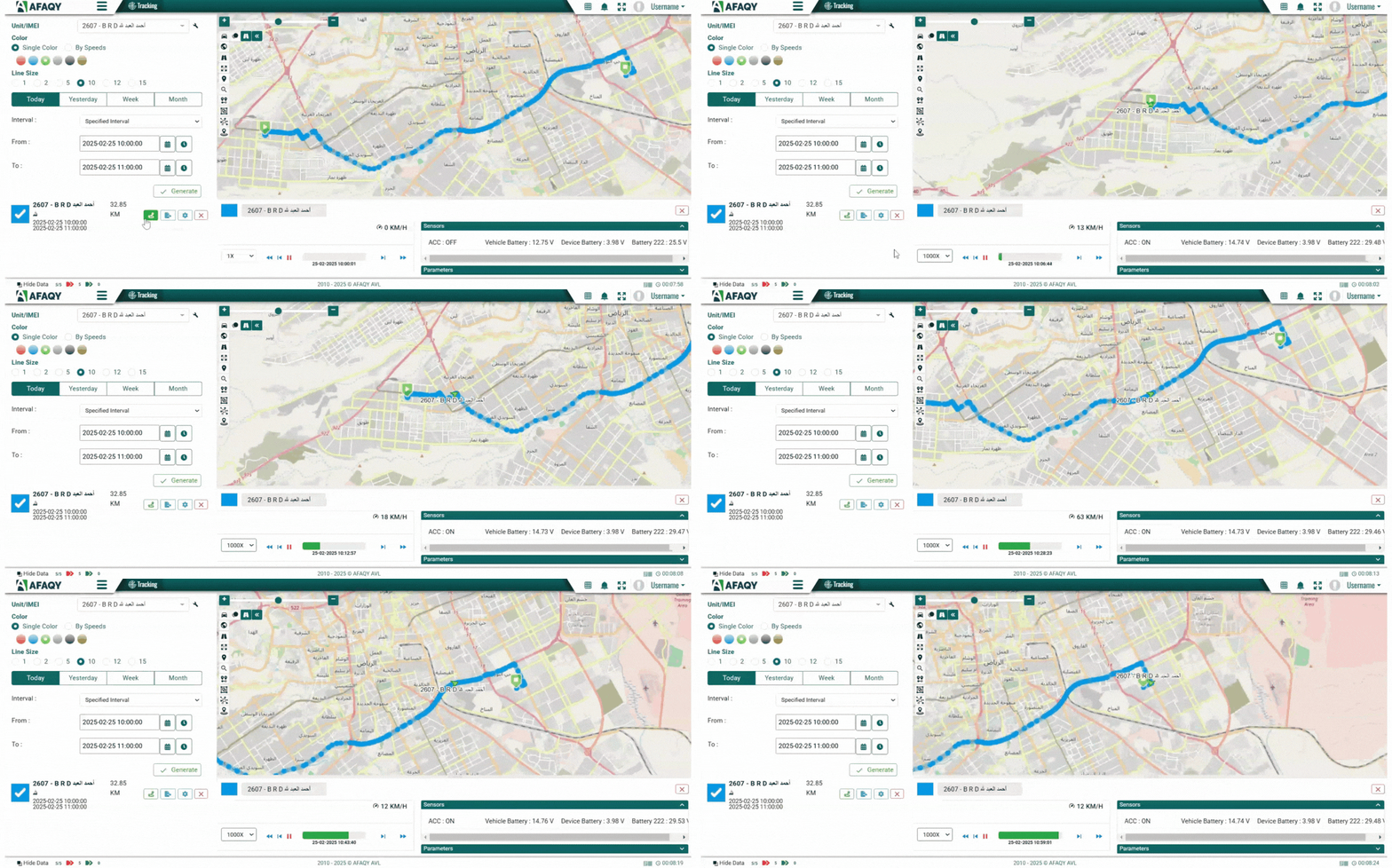
    This feature enables you to simulate a unit's movements over a specified time period.
    1. Click on the Track Player icon to display a sector below the map showing the vehicle’s name, speed, and sensors’ values, along with controls to play the track on the map.
    2. Adjust the playback speed using the dropdown list on the right. You can set the speed from 25x up to 1000x faster than normal.
    image
    1. Control the track simulation using the following buttons:
      • Play / Pause: Start or stop playback.
      • Previous Point: go back to the previous point.
      • Next Point: go to the next point.
      • Previous 10 Points: Skip back 10 points.
      • Next 10 Points: Skip forward 10 points.
    2. At the right side of the section, check the following dropdown menus:
      • The first menu displays Sensors' data, showing readings and updates from the sensors added to the system throughout the journey (e.g., vehicle battery).
      • The second menu displays Parameters, showing the raw values from the sensors physically attached to the unit (e.g., speed).
    icon
    Export
    ‣
    This feature exports the unit's tracking history.

    1. Click on the Export icon . 2. Choose between GeoJSON, KML, or KMZ format.

    icon
    Edit Unit
    ‣
    This feature allows you to view/hide annotations, events, stops, and parkings.
    ‣
    Annotations

    Annotations mark geographical points where the tracking device attached to the unit sends updates to the server. Each update includes the unit’s speed, date and time.

    image
    ‣
    Events

    Events are notifications sent to users to report road violations such as over speeding, crossing geofences, or harsh braking. They can also serve as reminders for upcoming services like oil changes, license renewals, or Iqama renewals.

    For example, if you add an over speeding event to your unit and set the speed limit to 80 km/h, you will receive a notification if the driver exceeds this limit. The event will also appear on the generated track on the map as a capital ‘E’ symbol.

    image

    Hovering over this symbol with your mouse will display a popup containing the event’s date, time, location, and type.

    image
    ‣
    Stops

    Stops refer to the periods when the vehicle is not in motion. These stops can occur for various reasons, such as fueling, resting, troubleshooting, emergency situations involving the road or driver, and many others. Each stop is recorded in the vehicle’s history, and a stop icon will appear on the generated track whenever the vehicle halts.

    image

    When you hover over the stop icon, a popup will display detailed information about the stop, including the date, time, address, and duration of the stop.

    image

    Stoppage times can be customized based on the user’s preferences. Typically, stops last no longer than 5 minutes, but users can set alerts within the system to be notified if a stop exceeds the desired duration or if the vehicle remains idle for too long.

    ‣
    Parkings

    Parking refers to the time a vehicle spends in a designated parking space. The key distinction between stops and parking lies in the engine status. While a stop occurs with the engine on and speed at 0 (Engine on, speed = 0), parking is marked by the engine being off (Engine off). Additionally, parking durations are typically longer than stops, often lasting hours, days, or even longer.

    Parking mostly takes place in parking lots or garages, while stops are usually observed on the road. Every time the vehicle is parked, a parking icon will appear on the generated track.

    image

    When you hover over the parking icon, a popup will display the date, time, address, and duration of the parking event.

    image
    icon
    Remove Track
    ‣
    This feature deletes the generated track.

    1. Click on the Remove Track icon .

    icon
    Second by Second
    icon
    Multi-Unit Follow