AFAQY Knowledge Base
    Monitoring
    Monitoring

    Monitoring

    📖 Afaqy Knowledge Base / AVL / Monitoring

    CONTENTS
    ‣
    Introduction
    • About Afaqy
    • AVL Pro
    ‣
    Technical Requirements
    • Recommended Web Browsers
    • Hardware Specifications
    • Internet Connection
    ‣
    Quick Start
    • Account Setup
    • Logging In
    • Resetting Password
    • Glossary
    ‣
    Map
    • Map Navigation
    • Map Tools
    ‣
    Monitoring
    • Monitoring List
    • Monitoring Tools
    • Monitoring Fields
    ‣
    Dashboard
    ‣
    Statistics
    • Overview
    • Accessing Statistics
    • Filters & Controls
    • Units
    • Status
    • Others
    • Activity & Reporting
    • Exporting Data
    • Related Pages
    ‣
    Charts
    • Chart Types
    • Creating a chart
    • Chart Tools
    ‣
    Geofences
    • Overview
    • Purpose
    • Page Components
    • Display Modes
    • Unit Count Indicator
    • Actions
    • Best Practices
    ‣
    Reports
    • Reports Tab
    • Templates Tab
    • Schedules Tab
    ‣
    Report Categories Breakdown
    • Summary Reports
    • Vehicle Activity Reports
    • Driving Quality Reports
    • Zones Activity Reports
    • Sensors Activity Reports
    • Other Reports
    ‣
    Units
    • Selecting Columns
    • Creating a Unit
    • Creating a Sensor
    • Creating a Command
    • FAQs
    ‣
    Units Management
    • Importing Units
    • Accessing Units
    • Unit Groups
    • Unit Shared Groups
    • Exporting Units
    • Deleting Units
    • FAQ
    ‣
    Messages
    • Permissions
    • Tracing Messages
    • Table View
    • Graph View
    • Common Tools
    • Troubleshooting
    ‣
    Second By Second
    • Permissions
    • Scope & Limits
    • Tracing Second by Second
    • Table View
    • Graph View
    • When to use
    • Troubleshooting
    ‣
    Tracking
    • Tracking Fields
    • Generating a track
    • Tracking Tools
    ‣
    Multi-Unit Follow
    • Screen List
    • Maps
    ‣
    Users
    • Selecting Columns
    • Adding a user
    • Users Management
    • Roles & Permissions
    • User Activity & Auditing
    • Best Practices
    • Permissions & Visibility
    ‣
    Geofences
    • Geofences List
    • Markers List
    ‣
    Geofences Management
    • Importing Geofences
    • Accessing Geofences
    • Geofences Groups
    • Exporting Geofences
    ‣
    Customers
    • Selecting Columns
    • Adding a customer
    • Customers Management
    ‣
    Resources
    • Trailers
    • Drivers
    • Events
    • Status
    • Custom Fields
    ‣
    Settings
    • Protocols
    • Packages
    • Roles & Permissions
    ‣
    Audit Log
    • Overview
    • Purpose
    • Scope of Logged Activities
    • Page Components
    • Event Details
    • Export & Retention
    • Access Control
    • Best Practices

    The Monitoring section offers a monitoring list and a map that works seamlessly to help you track and control real-time unit movements. This section provides essential features for effectively monitoring units and their parameters; however, the availability of certain features may vary based on your access rights.

    image
    1 2 3 4 5 6 7
    Homepage Button Navigation Sidebar Current Section User Apps Notifications Button Full-Screen Button Manage Account Button
    8 9 10 11 12 13 14
    Sub-User(s) List Share Live Location Search Button Refresh Button Switch to Group View Add to The List Filter with CCTV
    15 16 17 18 19 20 21
    Add All Available Customize Grid Columns Map View Button Monitoring / Total Stopping Units Moving Units Updates Button

    Monitoring List

    The monitoring list provides detailed information about each unit along with a set of operational actions. You can access the following information by hovering over the unit's name:

    image
    1. The time of the last received signal
    2. Location
    3. Speed
    4. Engine hours
    5. Odometer
    6. Incline from north
    7. Altitude (above sea level)
    8. Number of connected satellites
    9. Nearest geofence
    10. Nearest marker
    11. Time of signal recording on the tracking device
    12. Time of signal recording on the server
    ‣
    Detailed Unit Information

    For more detailed insights, such as driver and trailer assignments or precise sensor(s) values, double-click on the unit’s icon.

    image

    If a unit does not appear in the monitoring list, this indicates you do not have access to it. As a result, you won’t be able to send commands, request tracks, or perform most actions associated with that unit.

    Monitoring Tools

    The Monitoring section includes a set of tools designed to simplify the management of the monitoring list, providing a seamless monitoring experience. The names and functionalities of these tools are described below:

    icon
    Share Live Location
    ‣
    To generate a link that allows you to monitor units in real time:
    1. Click on the Share Live Location icon .
    image
    1. Select the desired duration for the live location link from the Expiration dropdown menu.
    2. Specify the start time in the Starts From field by entering the date and time.
    3. Add email addresses in the Email field (Optional Step), press Enter after each one to add multiple recipients (up to 10).
    4. Include mobile numbers in the Mobile Number field (Optional Step), press Enter after each one to add multiple recipients (up to 10).
    5. Fill in the Reason field to specify the purpose of sharing the live location (Optional Step).
    6. Click the Generate Link button to create the live location-sharing link, which will appear in the Link field.
    7. Use the Copy Link button to copy the link or click Send to share it with the specified recipients.
    8. Follow the link to access a new page displaying the live location of the units in the monitoring list.
    9. image
    icon
    Search
    ‣
    To search for a specific unit within the monitoring list:
    1. Click on the Search icon .
    2. Type the name or the IMEI of the unit you are looking for in the text field at the top left of the monitoring list.
    icon
    Refresh
    ‣
    To refresh the monitoring list:
    1. Click on the Refresh icon .
    2. The monitoring list will update to display the newly added units.
    icon
    Switch to Group view
    ‣
    To switch between Group View and Unit View:
    1. Click on the Switch to Group/Unit View icon .
    2. The display will toggle between viewing individual units and grouped units.

    This feature is especially useful for users managing large fleets. Instead of monitoring an extensive list of units, switching to Group View allows for a more organized approach by categorizing units into groups, making fleet management more efficient.

    icon
    Add to the list
    ‣
    To add a specific unit or multiple units to the monitoring list:
    1. Click on the Add to the List icon .
    2. A popup search window will appear.
    3. Search for the unit by selecting a keyword type (e.g., name, driver, owner) or choose All.
    4. Enter the keyword to display matching units in the search results.
    5. Check the filtering options (Not updated and Has CCTV) based on your needs.
    6. Click on the desired unit (press Ctrl for multiple selection).
    image
    1. Choose one of the following options:
      • Add to monitoring list: Adds the selected unit(s) to the existing monitoring list. The new units will be visible on both the list and the map, while previously added units will stay in the list but become invisible on the map.
      • Replace monitoring list: Replaces the current monitoring list with the selected unit(s), making them the only visible units on both the list and the map.
    icon
    Filter with CCTV
    ‣
    To filter units with active CCTV:
    1. Click on the Filter with CCTV icon .
    2. The list will update to show exclusively units with active CCTV.

    This feature allows for quick identification and monitoring of CCTV-equipped units.

    icon
    Add all available
    ‣
    To add all available units to the monitoring list:
    1. Click on the Add All Available icon .
    2. All units will be added to the monitoring list.

    If you previously replaced the monitoring list with a customized one, this feature would restore it to its original state.

    icon
    Customize Grid Columns
    ‣
    To customize the columns in the monitoring list in order to display additional details:

    The Monitoring section provides access to the following columns:

    Controls the visibility of units on the map through toggle buttons (Indelible).
    Name
    Displays the unit's name as specified in its main tab (Indelible).
    Speed
    Shows the unit's speed based on signals from the tracking device.
    Unit Tracking
    Enables tracking control for units on the map.
    Connection State
    Displays the connection state of the device assigned to the unit. The state check interval can be configured in minutes.
    Motion State
    Indicates whether the unit is in motion. The state check interval can be configured in minutes.
    Data Accuracy
    Displays the number of satellites locked onto the unit. The satellite check interval can be configured in minutes.
    Quick Messages
    Shows signals received from the unit. Filtering options include today, yesterday, week, and month.
    Quick Track
    Displays the complete track of the unit. Filtering options include today, yesterday, week, and month.
    Commands
    Lists commands that can be executed on the unit, such as "Stop Vehicle".
    CCTV
    Displays surveillance cameras attached to the unit.
    Properties
    Allows modification of the unit's properties.
    Clear List
    Removes the unit from the monitoring list.
    Unit Profile Details
    Displays detailed information about the unit, including operation code, plate number, vehicle type, VIN, model, year, product category, truck type, shipment type, and shipment payment type.
    Company
    Displays the company assigned to the unit.
    Driver
    Displays details of the driver assigned to the unit. Options include name, image, phone, or a combination of these.
    Trailer
    Displays details of the trailer assigned to the unit. Options include name, image, or a combination of both.
    Sensor Colors
    Displays the sensor’s value allocated to the unit. Supported sensor types include ignition ACC, digital input, analog input, temperature, humidity, door (1 & 2), cooling unit, RFID, RPM, weight, liquid, fuel (volume and percentage), engine hours, engine mileage, fuel consumption, trailer bind, driver bind, internal/external battery voltage, passengers, SOS (unit and passenger), accident, GPRS, SMS, and custom sensor types.

    Monitoring Fields

    By default, the monitoring list in the Monitoring section includes the following features:

    icon
    Watch unit on map
    ‣
    This feature enables you to track the unit on the map.
    • A green icon indicates that a unit is visible on the map , while a dimmed icon indicates it is not .
    • Clicking the Watch unit on map icon in the header toggles the visibility of all units. Clicking it once makes all units visible while clicking it again hides them.
    • To monitor a specific unit, first ensure all units are hidden. Then, click the Watch unit on map icon in the same row as the desired unit:
    image
    icon
    Connection State
    ‣
    This feature indicates if the unit is currently connected to the internet
    • A green icon indicates that a unit has internet connection , while a dimmed icon indicates it is not .
    • Clicking the Connection State icon in the header sorts the units by their connection status in both ascending and descending order.
    icon
    Motion State
    ‣
    This feature displays the unit's motion state.
    • The unit is moving with the engine on.
    • The unit is moving with the engine off (towed).
    • The unit is stationary with the engine on.
    • The unit is stationary with the engine off.
    • The unit was moving.
    • The unit was stationary.
    • The unit doesn't have an ignition sensor.
    • Clicking the Motion State icon in the header sorts the units by their connection status in both ascending and descending order.
    icon
    Data Accuracy
    ‣
    This feature indicates data accuracy based on the number of locked satellites.
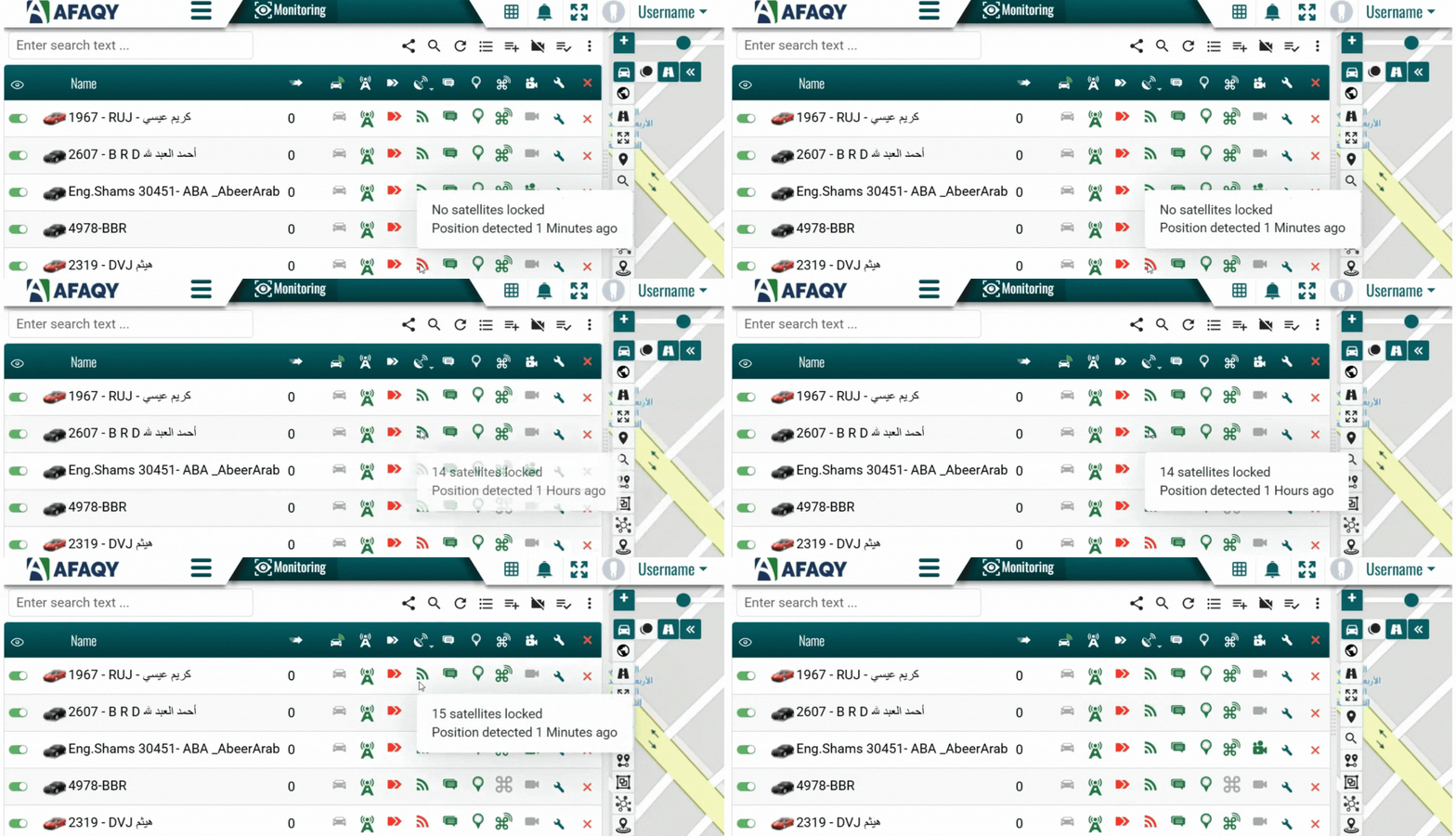
    • A green icon indicates that satellites are locked onto the unit , while a red icon indicates no satellites are locked .
    • Hovering over this icon in a unit's row reveals the number of satellites locked onto the unit and the time the latest position was received.
    image
    • Clicking the Data Accuracy icon in the header sorts the units by their number of satellites locked, in both ascending and descending order.
    icon
    Quick Messages
    ‣
    This feature retrieves all the signals from the devices attached to the unit.
    • A green icon indicates that signals can be displayed , while a dimmed icon indicates insufficient rights to query signals from this unit .
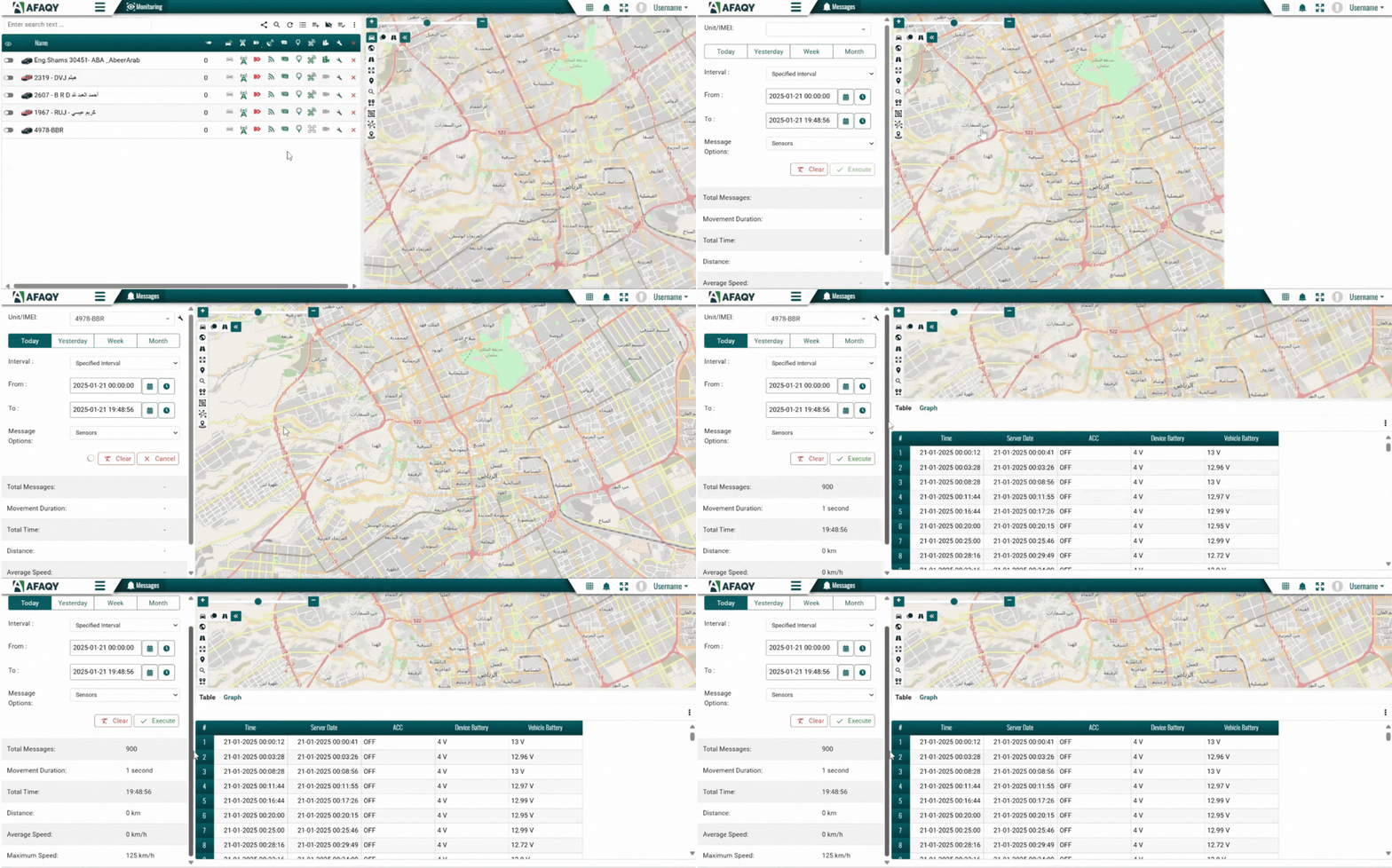
    • Follow these steps to retrieve signals from a specific unit:
    image
    1. Click on the Quick Message icon in the same row as the desired unit.
    2. Set the time range using the From and To fields with the calendar icons or configure the Interval dropdown list to the desired time range.
    3. In Message Options, choose one of the following:
      • Parameters to get the raw signals directly from the device.
      • Sensors to get the signals after they have been processed to fulfill the sensor's objective.
      • Both to retrieve both raw and processed signals.
    4. Click Execute to retrieve the signals.
    5. View the results in the Table tab or switch to the Graph tab for a graphical view.
    6. Use the Clear button to reset your selections if needed.
    icon
    Quick Track
    ‣
    This feature retrieves the tracks taken by the unit.
    • A green icon indicates that signals can be displayed , while a dimmed icon indicates insufficient rights to query tracks from this unit .
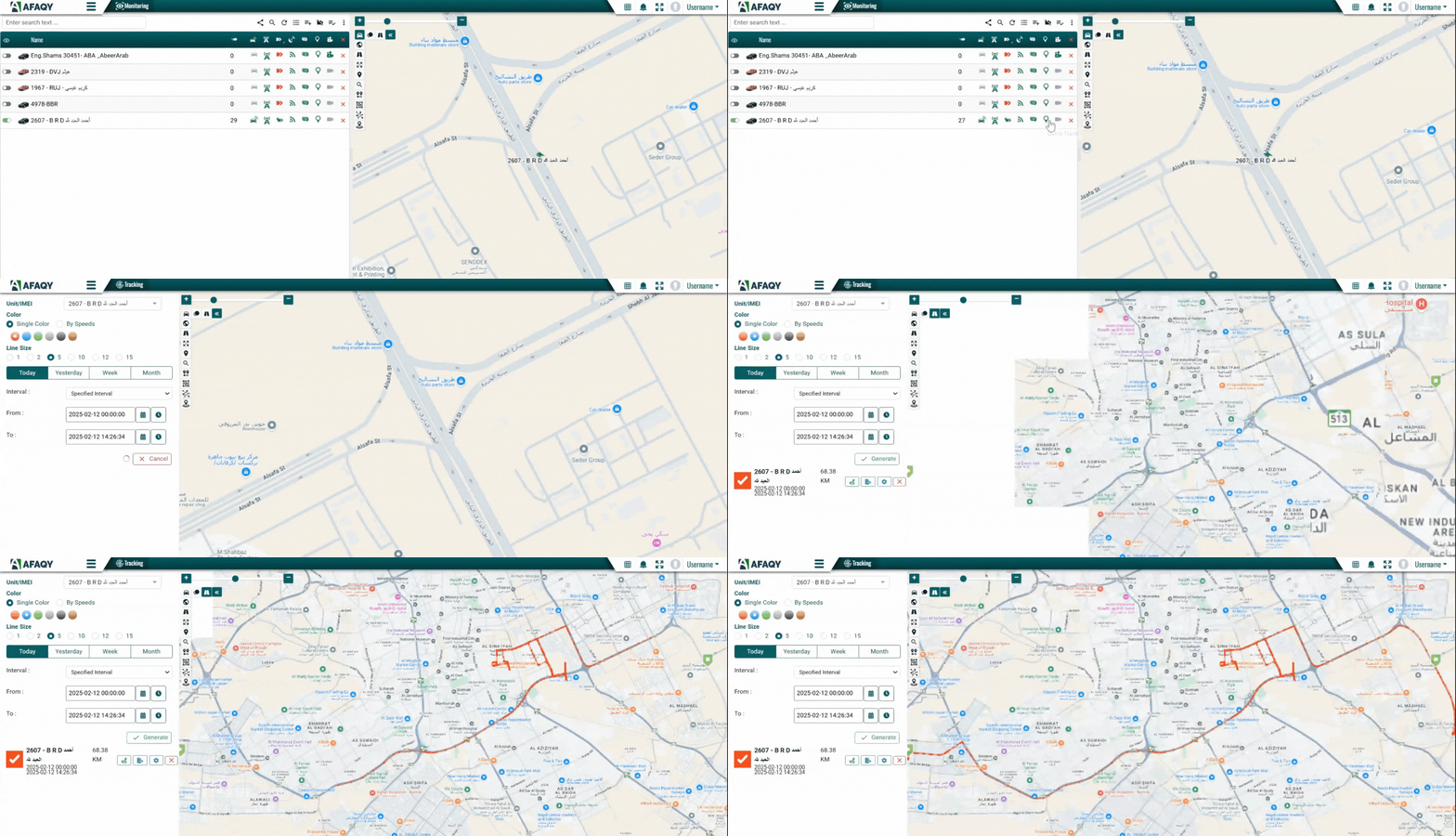
    • Follow these steps to retrieve tracks recorded by a specific unit:
    image
    1. Click on the Quick Track icon in the same row as the desired unit.
    2. Select the line’s color for the track or choose the By Speeds option to specify colors based on the unit's speed.
    image
    1. Specify the line’s size.
    2. Set the time range using the From and To fields with the calendar icons or configure the Interval dropdown list to the desired time range.
    3. Click Execute to retrieve the signals.
    4. View a simulation of the unit's movements by selecting the Track Player icon .
    5. Use the Remove Track icon to reset your selections if needed.
    6. Repeat the steps mentioned to create another track if needed.
    icon
    Commands
    ‣
    This feature allows you to send commands to the unit.

    A command is a powerful tool that enables users to remotely control and communicate with the unit. It acts as an instruction sent to the unit, typically via a relay device, to carry out a specific task. This feature is especially valuable for industries like car rental agencies, as it allows them to regain control of their units in critical situations, such as theft or delays. It is equally important for delivery services, enabling them to transmit essential data—such as the unit's current location and destination—directly to the unit in real time.

    • Types of commands: Engine On, Engine Off, Open/Close Door, Restart Device, Delete Device Record, and more.
    • A green icon indicates that commands can be sent , while a dimmed icon indicates that no commands are assigned to this unit .
    • Follow these steps to send a command to a specific unit:
    1. Click on the Commands icon in the same row as the desired unit.
    2. A list of assigned commands will appear in a pop-up window.
    image
    1. Select the command you wish to execute.
    2. Click Execute to send the command to the unit.
    icon
    CCTV
    ‣
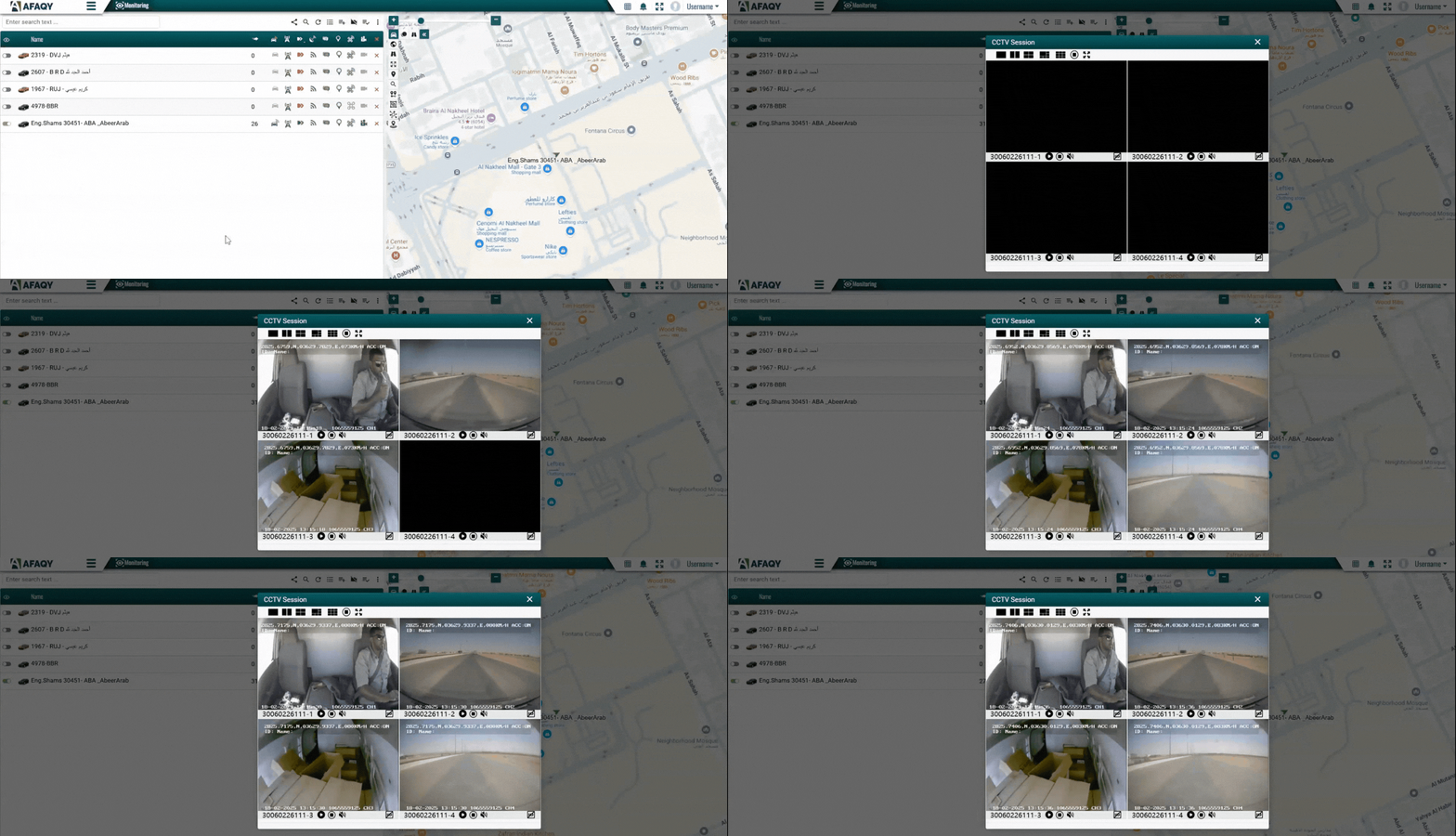
    This feature displays real-time videos from inside and outside the unit.

    Please note that this feature is only available for units where CCTV is installed. If your units do not have CCTV, use the Customize Grid Panel to hide this feature.

    • A green icon indicates that a unit has CCTV installed , while a dimmed icon indicates it does not .
    • Clicking the CCTV icon in the header displays units equipped with CCTV at the top of the monitoring list.
    • To monitor the CCTV, follow these steps:
    1. Click on the CCTV icon in the same row as the desired unit.
    image
    1. A pop-up window will appear displaying the CCTV streams in a grid.
    2. Customize the display preferences by choosing from the grid icons in the pop-up header.
    icon
    Properties
    ‣
    This feature enables you to edit the unit's properties.

    Clicking the Properties icon will open a window containing 12 tabs (or fewer, depending on your access rights). Each tab holds a property that you can easily edit or update for your unit.

    The property tabs are:

    • Main
    • Profile
    • Groups
    • Fuel Consumption
    • Accuracy
    • Shipment
    • Services
    • Sensors
    • Commands
    • Driver Behavior
    • Custom
    • Access
    icon
    Clear List
    ‣
    This feature allows you to remove units from the monitoring list.
    • Clicking the Clear List icon in the header removes all units from the monitoring list.
    • Clicking the Remove from the list icon in a specified unit's row, removes that unit from the monitoring list.
    icon
    Map
    icon
    Dashboard